Om Pilaji
Decides what the platform does next, and is the person a client talks to from the first conversation through to handover.
Kalman Consultancy Services designs and builds software systems that turn operational data into decisions — combining software engineering, applied machine learning and data infrastructure. Based in India, working with organisations wherever they are.
Kalman is a technology consulting and software engineering company. We take a specific operational problem — returns, workflow, reporting, a manual decision made a hundred times a week — and build the system that solves it.
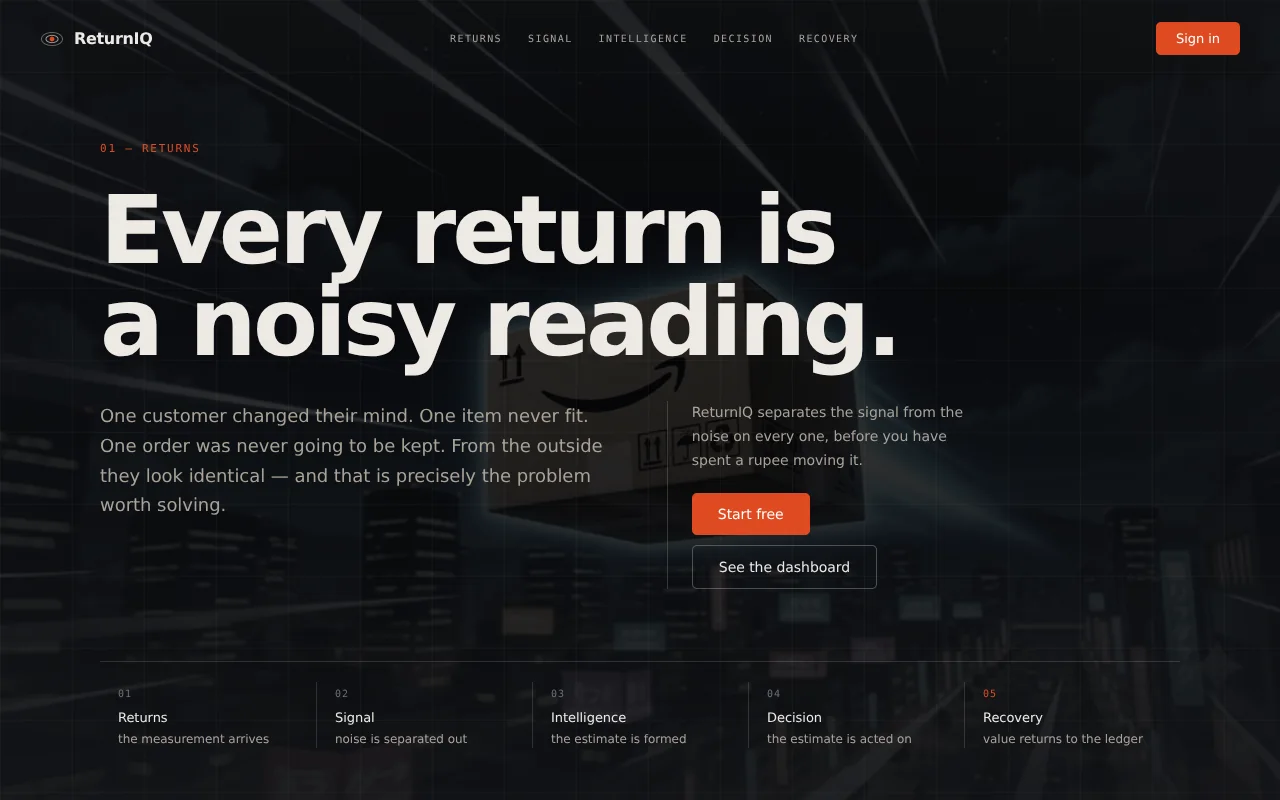
The name is the algorithm. A Kalman filter takes noisy measurements and produces an estimate you can act on. That is the pattern behind our engineering: not more dashboards, but systems that decide.
We are based in Hyderabad, India, and the work is remote by default. Returns cost the same whether the warehouse is in Pune or Rotterdam, so we take enquiries from anywhere and quote in your currency. We have no international clients yet — when that changes, this paragraph will say so.
Decides what the platform does next, and is the person a client talks to from the first conversation through to handover.
Owns the data model, the services and the decision engine that turns a graded item into a route.
Classification, extraction, forecasting and ranking, put inside a workflow where they change a decision. We will tell you when a rule set would work better than a model.
Backend services, APIs and web applications built to a written brief and handed over with the source and documentation.
Systems for the parts of a business that run on spreadsheets — intake, grading, routing, approval, reporting.
Getting operational data out of email threads and spreadsheets into something queryable, then keeping it current.
Webcam and camera input turned into usable signal — tracking, gesture, condition assessment — with filtering that makes the output stable enough to act on.
Removing the steps a person repeats by hand every week, and the errors that come with them.
Deployment, environments and monitoring for the systems we build, sized for the organisation that has to run them afterwards.
Data models, service boundaries and integration design, reviewed before code is written rather than after.
Building the smallest version that answers whether an idea works, before committing budget to the full system.
Autonomous multi-agent simulation, semiconductor design and verification tooling, space and satellite software, and financial infrastructure. These are long-term engineering interests rather than services we sell today — they sit on the roadmap, and we say so plainly rather than listing them as capabilities we can deliver this quarter.
Each engagement follows the same shape: the problem, the approach, and what you are left holding at the end.
Problem — a process exists only in someone's head or a spreadsheet. Approach — model it, build it, hand it over. Result — a running system with the source code and documentation in your hands.
Problem — the data exists but nobody can query it, and the same steps get repeated weekly. Approach — pipelines, storage, scheduled jobs. Result — reporting that updates itself.
Problem — a judgement call made repeatedly by a person. Approach — model the decision, measure it against how it is made today. Result — a decision that is consistent and auditable.
Problem — a build is about to start and the shape of it is not agreed. Approach — data model, boundaries, integration points, written down. Result — a specification your team or ours can build from.
Problem — nobody knows yet whether the idea is technically viable. Approach — the smallest honest prototype. Result — evidence, and a recommendation to proceed or stop.
Semiconductor tooling, autonomous simulation, space and financial infrastructure software are on our long-term roadmap and are not offered as services today. We list them under Work, marked as parked, rather than implying we can deliver them now.
Status is stated on every item. Nothing here is presented as a finished commercial product before it is one.
Automates the product return lifecycle and decides the disposition of each item — repair, replace, refurbish, recycle, scrap or resell — using condition grading, cost prediction and fraud checks.
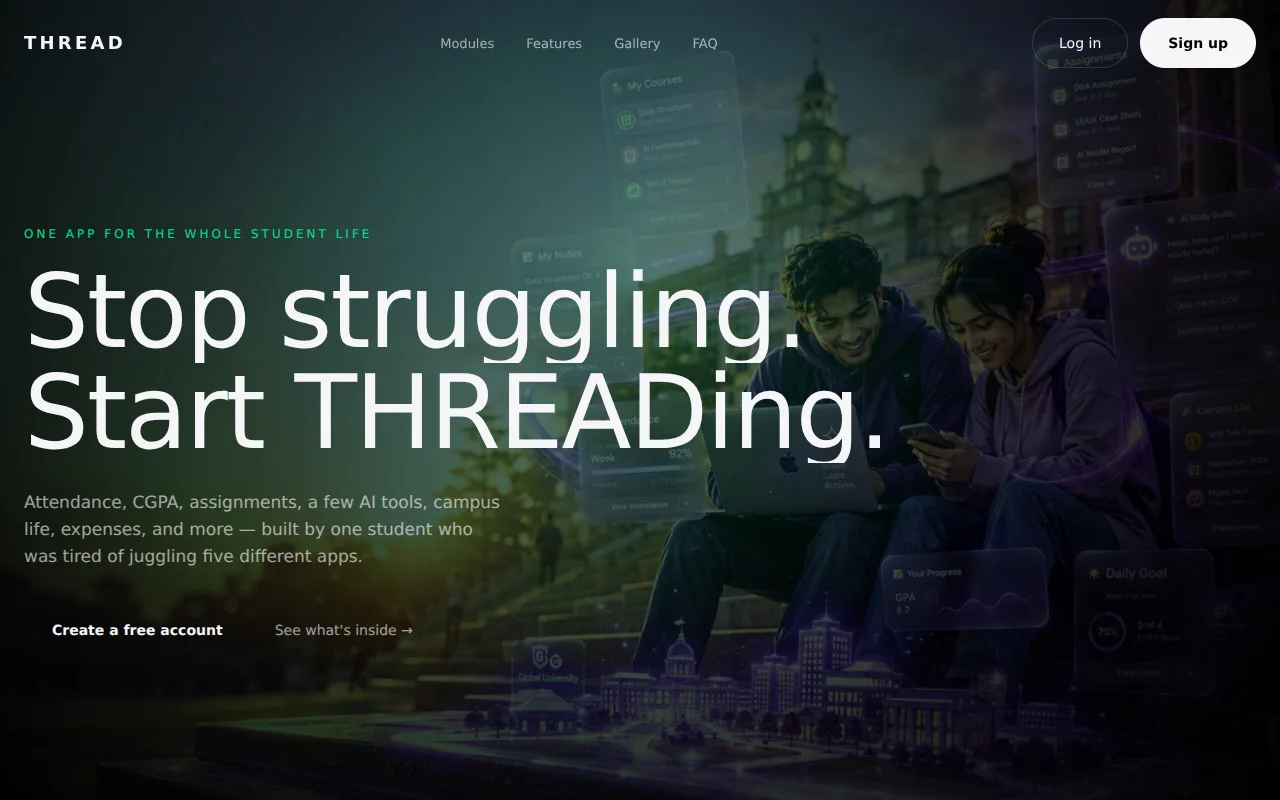
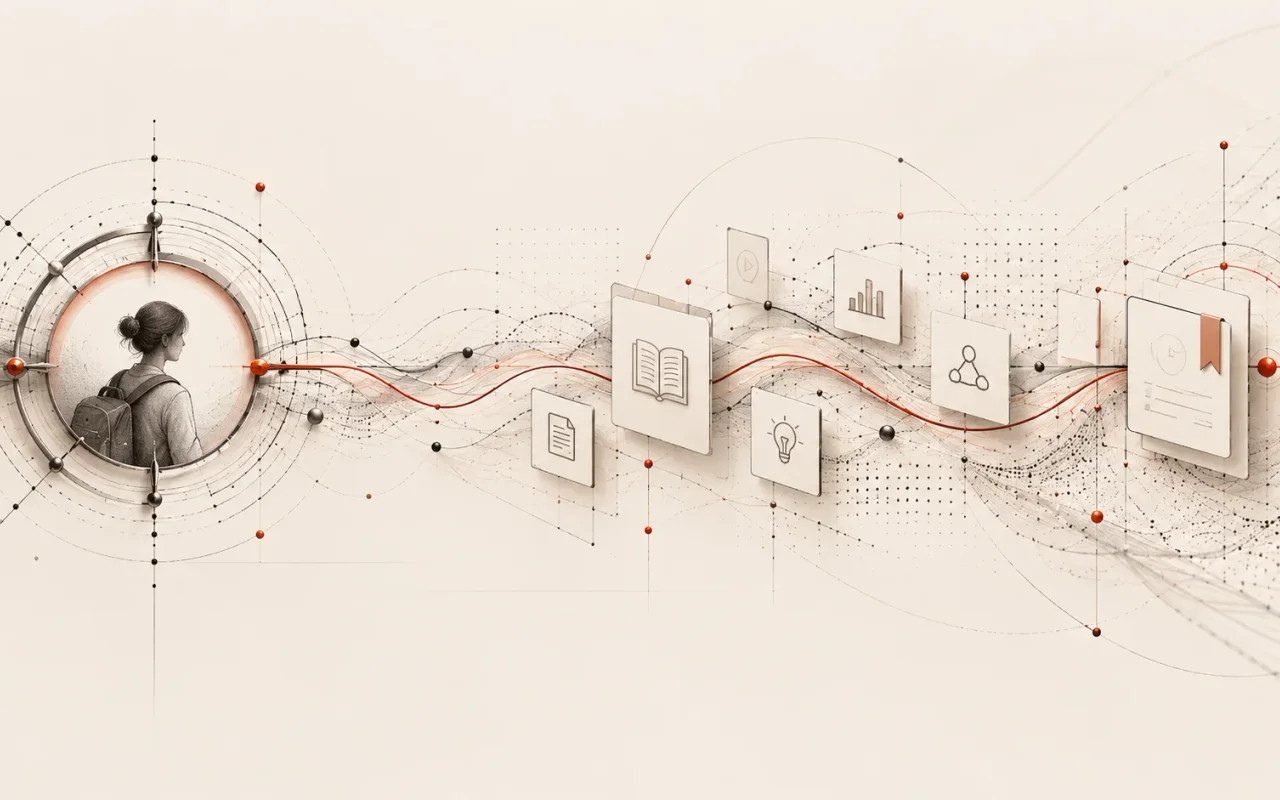
A campus platform for universities — the category occupied by Camu and similar student information systems. Where those record attendance and marks, THREAD is built around what students actually do with a course: learning paths, project work, and a record of how a subject was learned rather than only that it was passed.
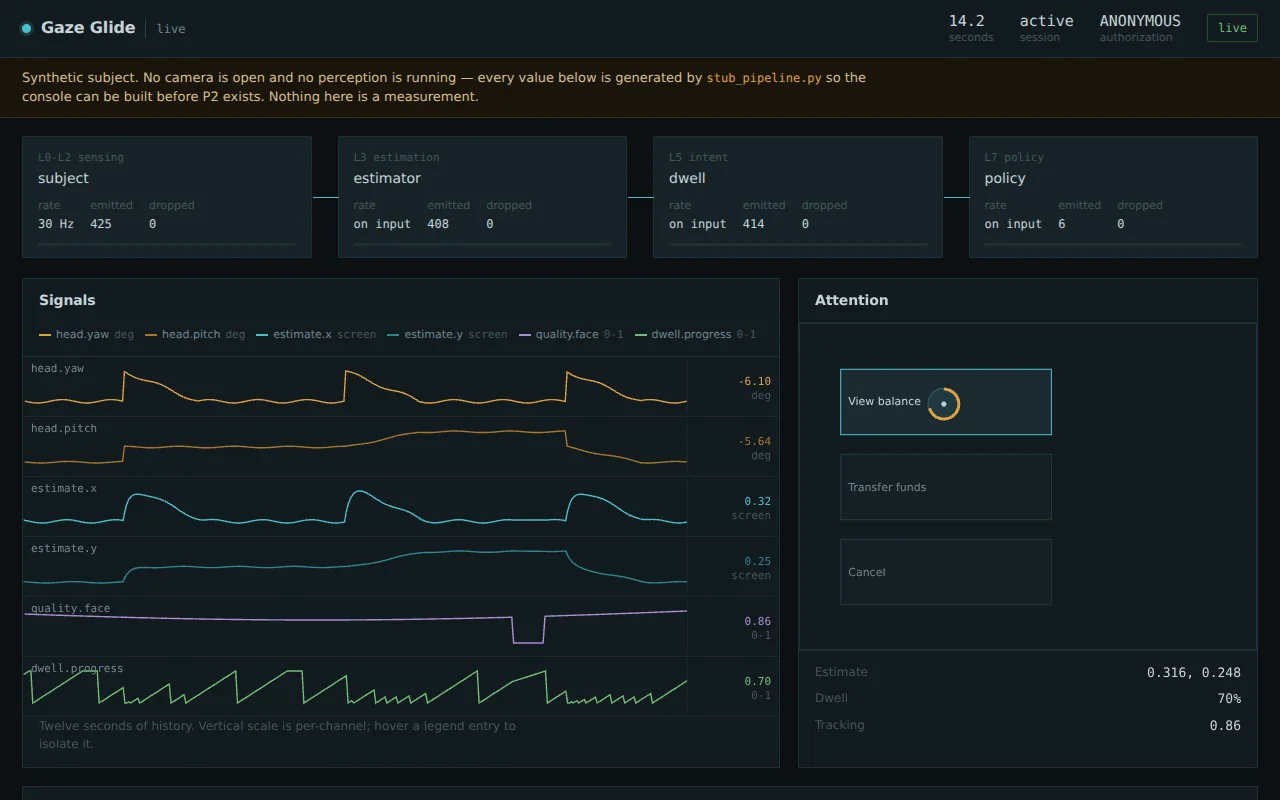
Computer control through an ordinary webcam using head movement, facial gesture and eye tracking, smoothed with a Kalman filter so the cursor is steady enough to use. Built for people with motor disabilities.
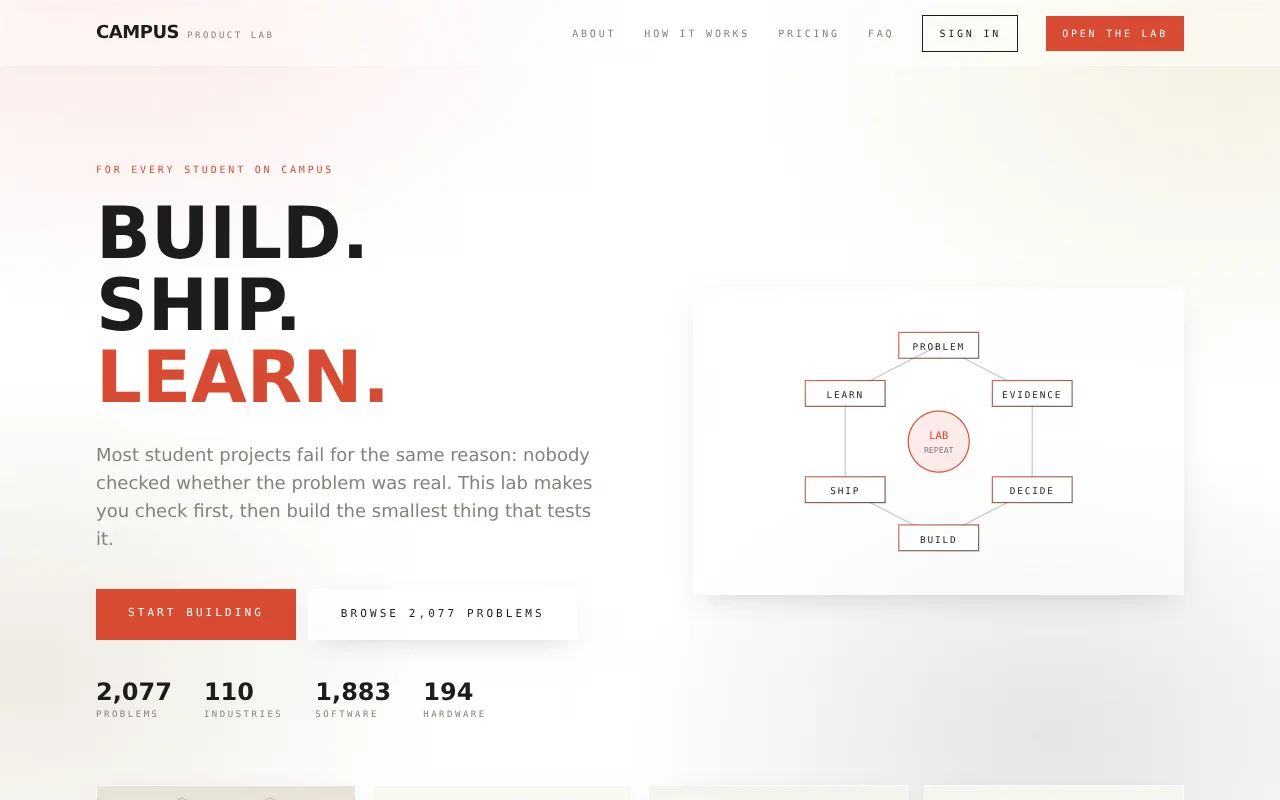
Internal tooling used to build and test our own products — roughly 10,500 lines of TypeScript with a 48-check smoke suite that runs against the real client bundle rather than a mock. Not sold; it is how the other work gets made.
A single-page scroll-driven site combining video, image and text, built to hold together from a 320px phone to a desktop display without a framework. Built as a working demonstration of front-end capability rather than as a product.
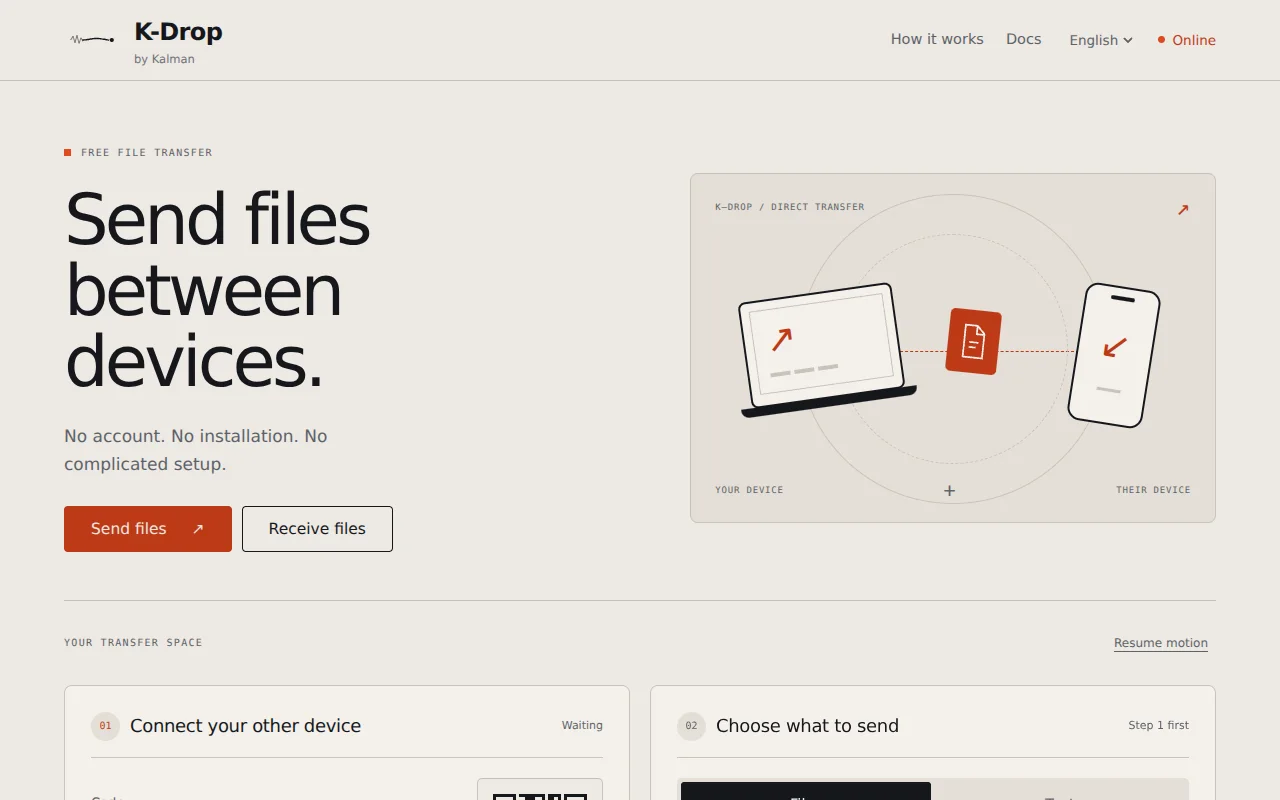
Peer-to-peer encrypted file transfer over WebRTC with a relay fallback. Installable as a progressive web app, English and Hindi, three dependencies total. Complete and working.
Semiconductor engineering tooling. Requires domain access and EDA relationships we do not currently have.
Agents representing people, businesses, transport and services, for city planning and supply chain testing. Years of work for a two-person team.
Mission planning and telemetry; payment and risk infrastructure. Both require relationships and regulatory standing we do not have as an unfunded company.
These are the sectors our work is aimed at and where our products are being built. We have no clients in them yet, so we call them areas of focus rather than industries we serve — the difference is deliberate and we will change the wording when it stops being true.
Returns, warranty claims and recovery of value from defective stock.
Reverse flows, routing and warehouse decision-making.
Customer returns, disposition and fraud patterns at volume.
Learning platforms and the resources students actually use.
Assistive interfaces for people who cannot use standard input devices.
Risk, fraud detection and payment infrastructure. Long-term, regulated.
Design assistance and verification automation. Roadmap.
Mission planning, telemetry and ground software. Roadmap.
Alongside client engineering, we work on problems that are not yet products. Two of these are active and have code behind them; the rest are areas we read, prototype in, and intend to work in as the company can afford to. Nothing here is published research and we do not claim otherwise.
Kalman filtering applied to noisy real-time input — the basis of Gaze Glide's cursor stability, and of how we think about operational decisions generally.
Estimating cost and recovery for each possible outcome when the inputs are incomplete, then choosing a route that can be explained afterwards.
Head, gesture and gaze tracking from ordinary webcam input, on hardware people already own.
Agents representing people, businesses and services, for simulating city planning, transport and supply chains.
Where machine assistance genuinely helps in RTL work, and where it does not.
Mission planning, orbital visualisation and control software. Long-horizon interest, no current work.
Seven stages, the same every time. You should know what happens next at every point in the engagement.
Understand the problem and what it currently costs. We say plainly if it is not something we can build.
Requirements, constraints and an explicit list of what is excluded. Fixed price, agreed date.
Data model, services and integration points designed before code is written.
A weekly demo of software that runs, so direction is corrected early rather than at the end.
Reliability, security and performance tested against the constraints agreed at stage two.
Delivered with source, documentation and a working deployment. It is yours.
An agreed support period after handover. Beyond that, ongoing work is optional and priced separately.
One point of contact, and it is one of the two people writing the code.
You would find out anyway, so here it is first. What we can promise is that the people who take your call are the people who write the code, and that we will say when something is outside what we can do.
Founded by Om Pilaji and Sarvajeet Bajikar, both studying computer science engineering at Woxsen University, Hyderabad. Om leads product direction and client engagement; Sarvajeet leads engineering and architecture.
The plan is to grow Kalman from a technology consultancy into an engineering and research organisation building intelligent software systems across several industries — starting with one product that works, with real users paying for it, before the second one begins.
Consulting funds the products. Products earn the right to the next product. We would rather be a small company with something real running in production than a large-sounding one with a long list of announcements.
Built in India, designed for global problems. We are not trying to be an offshore development shop that happens to be cheap — we are trying to build software good enough that where it was written stops being the interesting part.
Kalman is two people. An intern here is not shadowing a team — you take a piece of real work, you own it, and it ships or it does not. You will be able to point at the specific thing you built. That is the trade we are offering, and it suits some people and not others.
We will not run an unpaid internship dressed up as experience. Stipend, hours and length are agreed with you in writing before you start, not after. Ask about them in your first message and we will answer with a figure rather than a range.
Backend services, frontend work and data pipelines on the returns platform. You will write code that runs against real return data, not a tutorial project. We expect one thing you have already built, with a link to the source.
The returns console is used by warehouse staff under time pressure, often on a low-end screen. The work is interaction design and information hierarchy for people who are not enjoying themselves. Portfolio matters more than software you know.
Return intake, grading stations, storage and disposition are physical flows before they are software. We want someone who can read a floor plan and tell us where our model of a warehouse is wrong.
Positioning, written content and outbound to manufacturers and retailers. Our voice rule is plain and specific — no inflated language, no invented statistics. If you write that way already, say so with a sample.
Research support on contracts, intellectual property assignment, data protection under the DPDP Act, and the terms we put in front of clients. This is a research role. Nothing produced here is legal advice, and all of it is reviewed by a qualified professional before it is used.
Sit with the returns process at a real retailer, document what actually happens, and turn it into the rules the platform runs on. Suits commerce, management and economics students who like detail.
Send one thing you built or wrote, the hardest problem you hit inside it, and what you want to be better at in a year. No CV template required, no covering letter. Write to om@kalmanconsultancy.com with the track name in the subject line.
We reply to every application within 24 hours, including the ones we turn down. Remote is fine. We are based in Hyderabad and the company is pre-incorporation, which we would rather you knew before you apply than after.
Engagements are quoted per project, not per hour, so there is no price list to convert. Pick a currency and it travels with your enquiry — we will price and invoice in it. Currently set to INR.